The most beautiful covered passages of Paris
A timeless walk through the heart of the capital
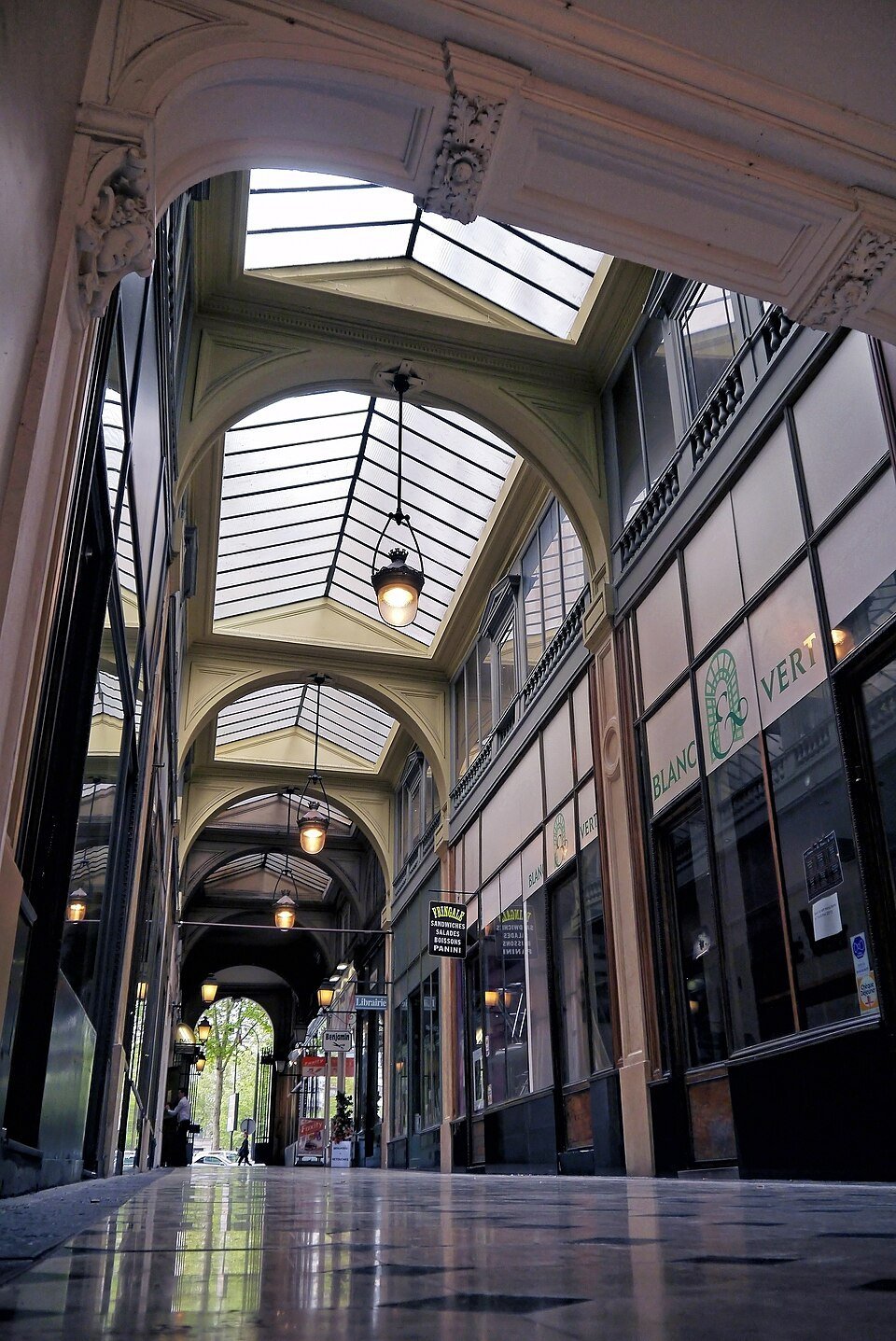
Looking for the finest passages in the city? Hidden gems of old Paris, the most beautiful covered passages of Paris offer an enchanting walk beneath 19th-century glass roofs. Galerie Vivienne, the Passage des Panoramas, the Passage du Grand-Cerf and the Passage Jouffroy shelter antique shops, a designer boutique or two, art galleries and inviting cafes, far from the busy boulevards. To wander these covered arcades is to travel back to another era, between mosaic floors, elegant facades and soft light. This guide covers the passages worth visiting, their history and a few practical ideas for your walking tour. Whether you love architecture, shopping or simply strolling, drift from one passage to the next and explore a heritage that is unique in France. A few metro stops away, in the 2nd arrondissement, the Hôtel Filigrane is the perfect base for the walk.
A 19th-century heritage
The origins of the Parisian passages
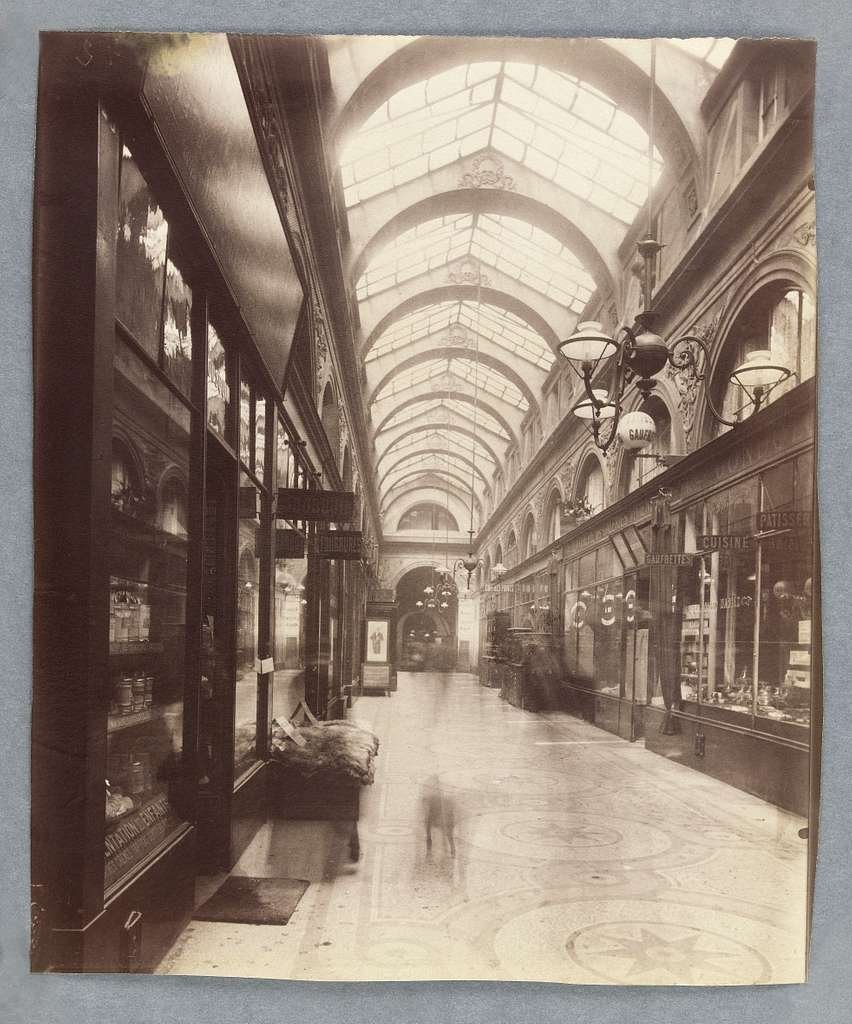
Known in French as the passages couverts, these passages were born at the very end of the 1700s and multiplied soon after. More than one hundred and fifty passages once filled the capital. About twenty remain today, mostly in the 2nd and 9th districts of central Paris. Privately owned for the most part, these passages couverts are almost all listed monuments and tell an entire chapter of the history of Paris.
Their idea was simple and brilliant: to link two streets with a covered gallery, so that people could shop and stroll sheltered from the rain. Fitted early with gas light, paved with mosaic and marble, these passages couverts became the first temples of modern shopping, long before department stores such as the Galeries Lafayette. Many disappeared during Baron Haussmann's transformation of the capital, which is what makes the survivors so precious. Today each passage charms lovers of fine buildings as much as fans of a pretty boutique, and these passages remain among the most enchanting places to visit in town, true covered walkways in the heart of the capital. Prized for their architectural beauty, they blend neoclassical lines with a later touch of Art Nouveau.
Galerie Vivienne, the most elegant
A Restoration jewel near the Palais Royal
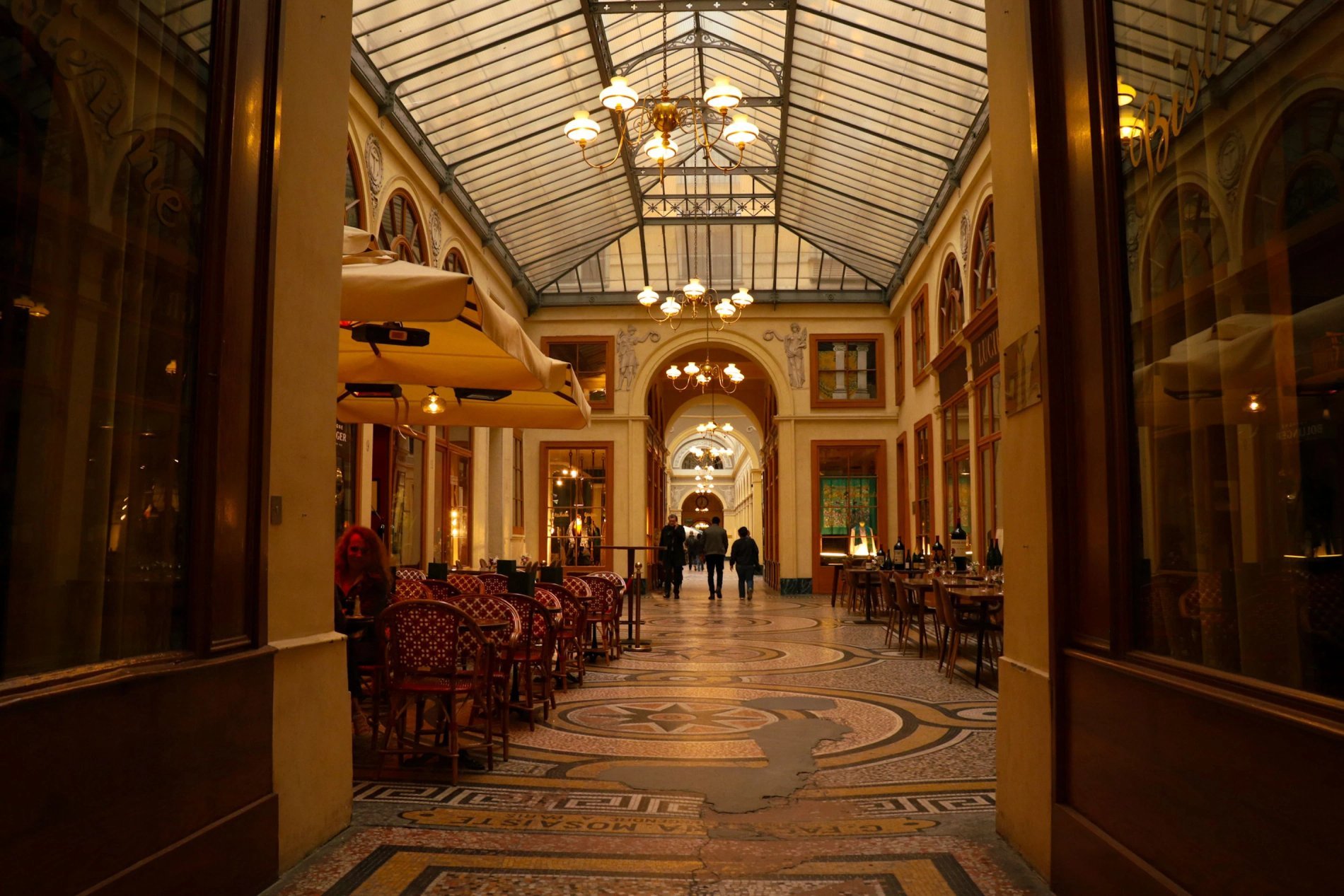
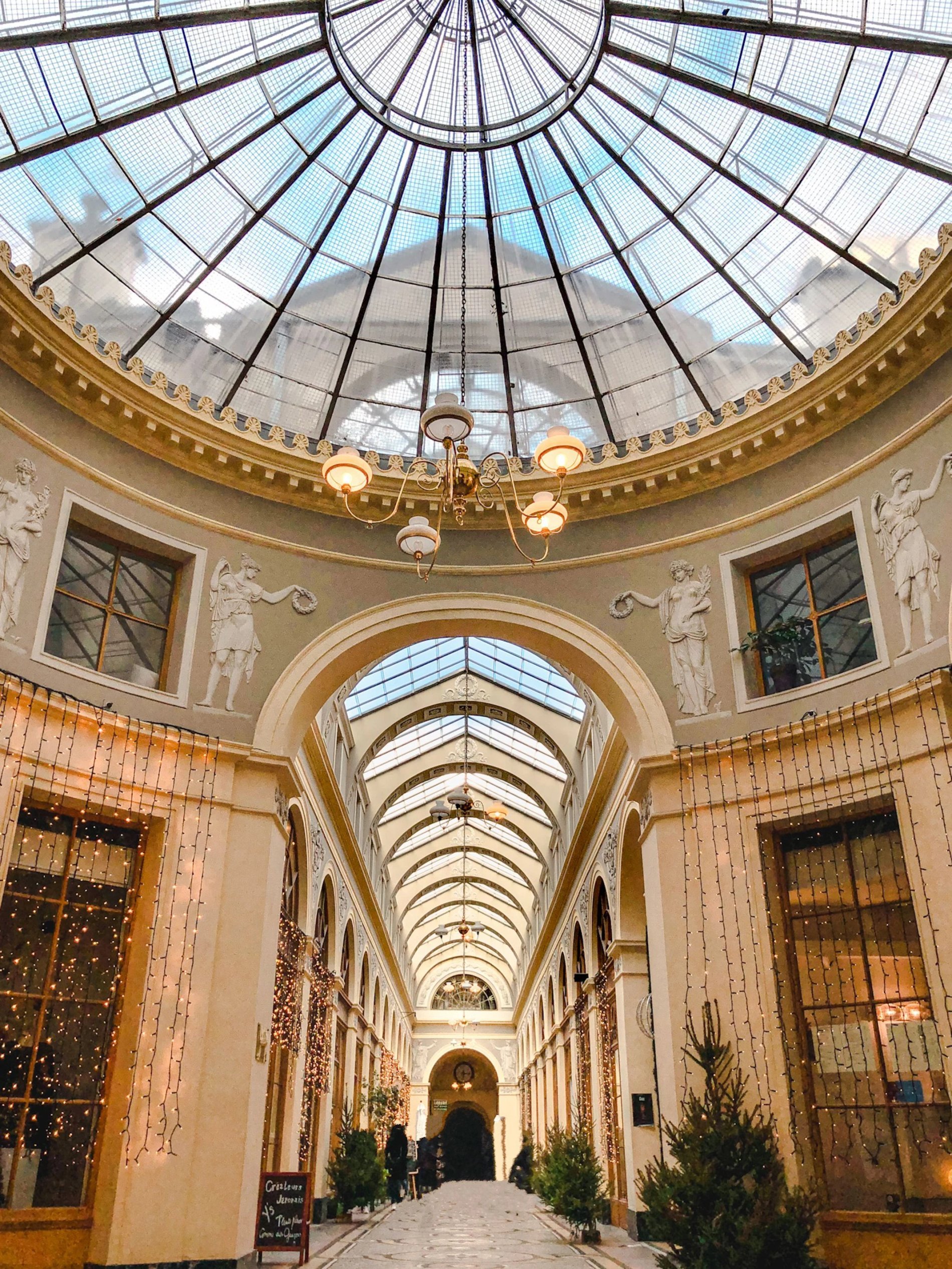
Opened in 1823 and designed by the architect François-Jean Delannoy, the Galerie Vivienne is probably the most refined passage of all. Its original mosaic floor, signed by the Italian master Facchina, its bright arches and its rotunda make it a model of the style, full of understated elegance. Set on Rue Vivienne, steps from the Bibliothèque nationale de France and the Palais Royal, it is located near a famous antique bookshop, fashion ateliers, tea rooms and a refined boutique or two. Do not miss the staircase of Vidocq's former home, near the entrance at number 13. A few steps away, on the same street, the Hôtel Filigrane invites you to continue the day and to book a room whose style echoes the neighbourhood.
A few metres further, on Rue des Petits-Champs, the Galerie Colbert takes over. Built in 1826 to rival its neighbour, Colbert charms with a vast rotunda and a glass dome. Now attached to the Institut national d'histoire de l'art, this cultural institution hosts exhibitions and events all year. Together, these two galleries form one of the loveliest pairs in France.
Passage des Panoramas, the oldest
The cradle of the Parisian passages
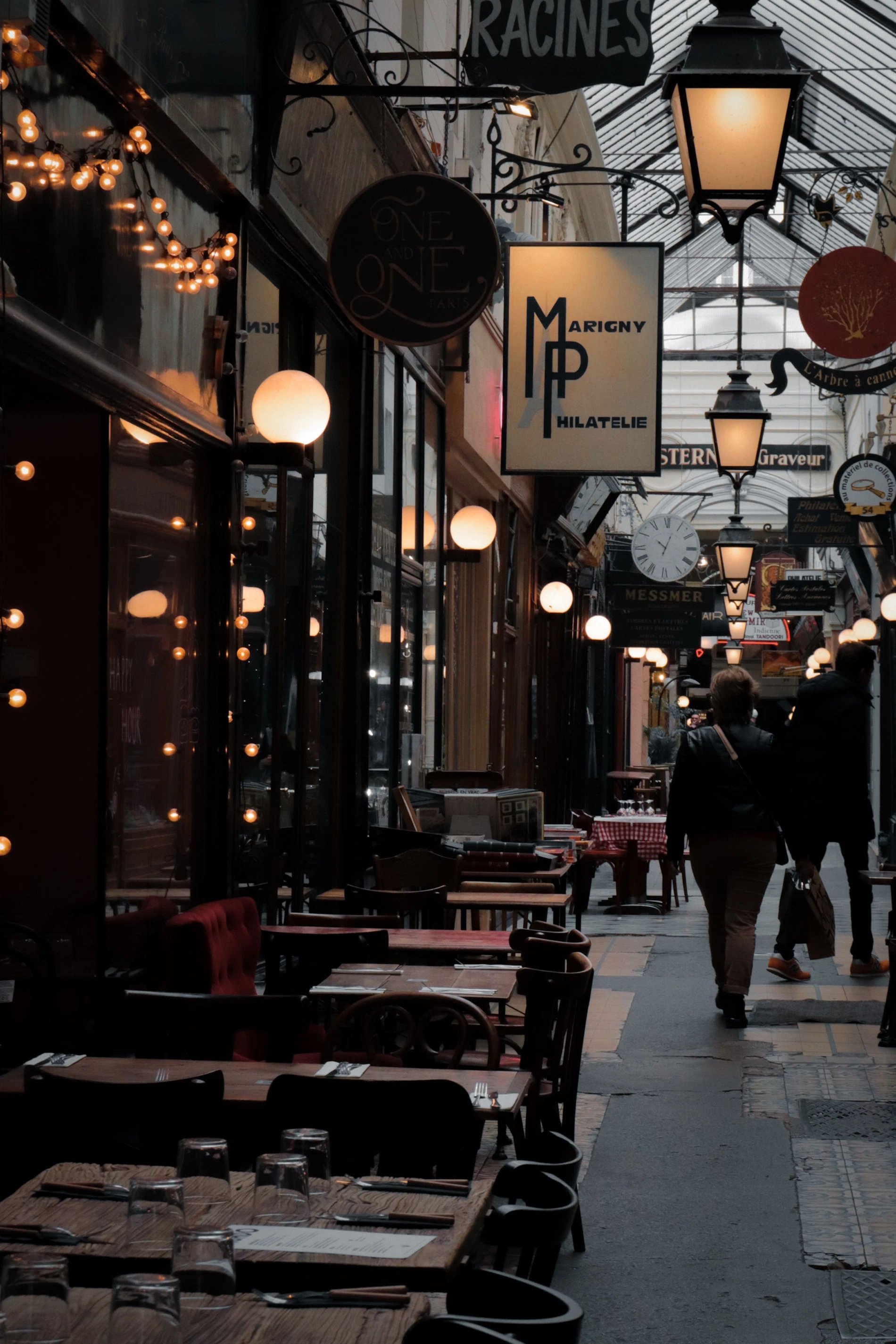
Opened at the very end of the 18th century, the Passage des Panoramas is often called the oldest passage still in business. It is here that Parisians discovered gas light as early as 1817. Set on Boulevard Montmartre, it owes its name to the huge painted scenes that once drew the crowds. Its maze of corridors, its old engravers' shopfronts and its weathered signs create a singular atmosphere.
The passage is now one of the liveliest foodie corners in town. Fans of good food come for a string of restaurants, bistros and wine bars, while collectors hunt for postcards, a rare stamp or a second-hand book. It is an ideal place for lunch, with plenty of dining options and a café menu on every corner, plus a good restaurant on Rue Sainte-Anne close by. Parisian people and travellers from around the world love to meet here, and the reviews posted on Google often praise its retro charm.
Passage Jouffroy and Passage Verdeau, the duo of the 9th
On the other side of Boulevard Montmartre
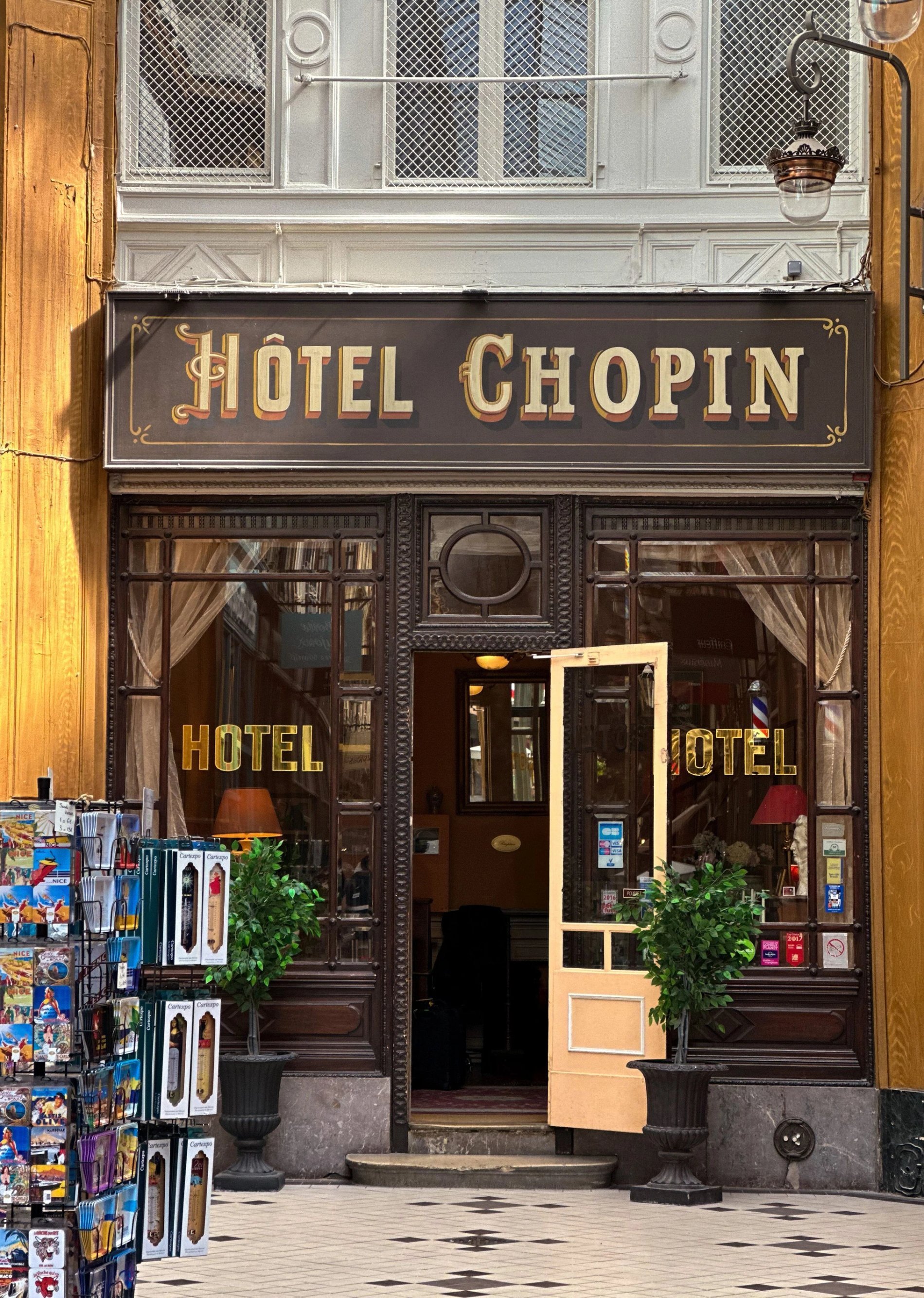
Across Boulevard Montmartre, the Passage Jouffroy opened in the mid-1840s. The first Parisian passage built entirely of metal and fully heated, it is home to the famous Musée Grévin and its wax figures, the charming Hôtel Chopin tucked away at the end, plus a stationer and a boutique of unusual objects, antique toys and collector's canes. Its timeless setting has appeared in more than one film, and families love to explore this passage, especially at the weekend.
Crossing Rue de la Grange-Batelière, you reach the Passage Verdeau, opened in 1847. More confidential, it delights hunters of old prints, rare volumes and vintage cameras beneath a pretty glass roof. The route from the Panoramas to this passage, without any transport, is one of the nicest routes in central Paris, and a perfect idea on a rainy day.
Galerie Véro-Dodat, 1st arrondissement charm
A preserved neoclassical decor
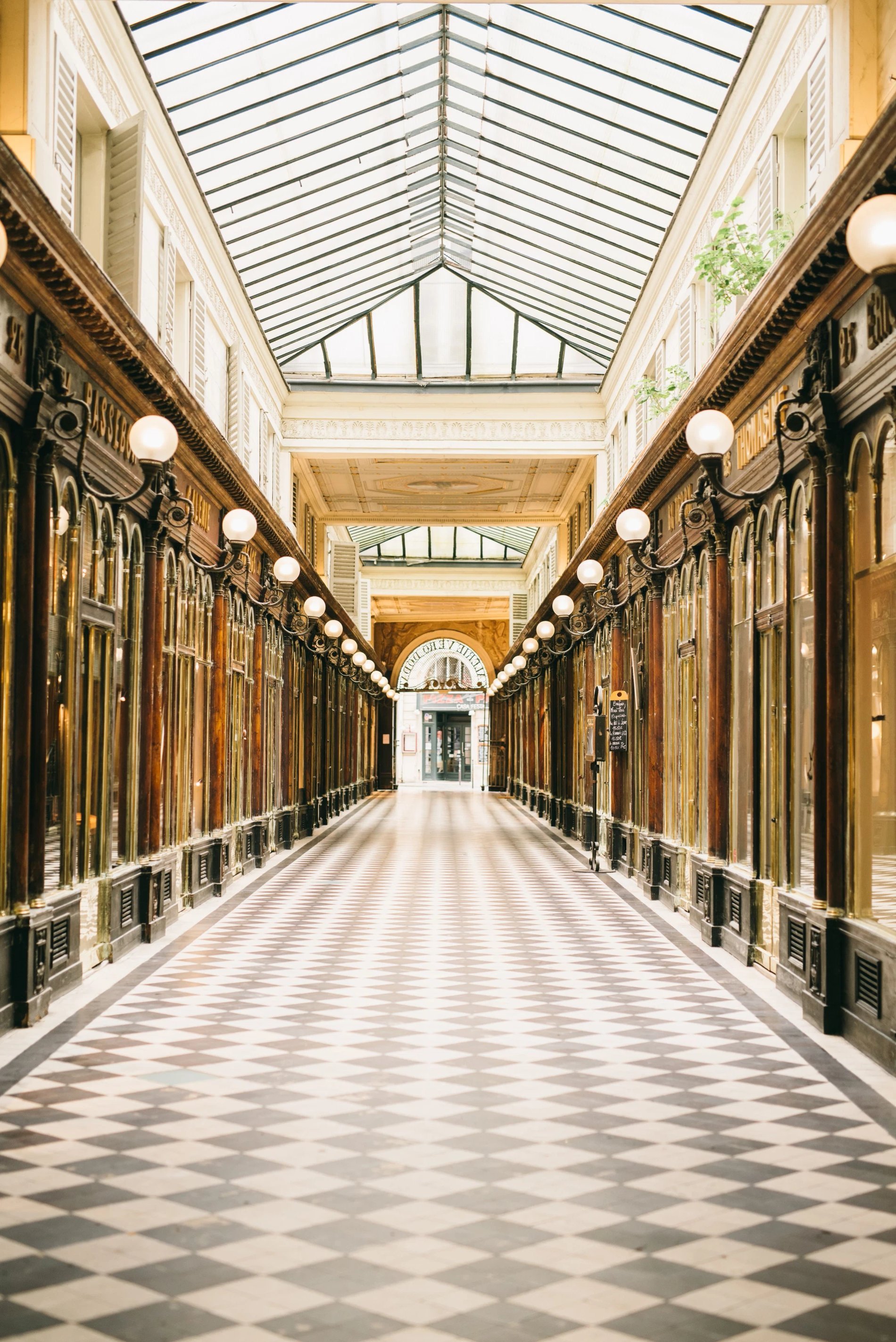
Built in 1826 by two prosperous charcutiers, Véro and Dodat, this passage links Rue du Bouloi to Rue Jean-Jacques-Rousseau, between the Louvre and the Palais Royal. Its decor is one of the best preserved in the city: a marble floor in a checkerboard pattern, columns, painted ceilings and shopfronts in dark wood. Long asleep, the Galerie Véro-Dodat regained its shine thanks to art ateliers, luxury houses and the workshop of a famous shoe designer. From its entrance on Rue du Bouloi, this passage is a refined destination for a quiet visit.
Passage du Grand-Cerf and its glass roof
Design and creation in the Montorgueil district
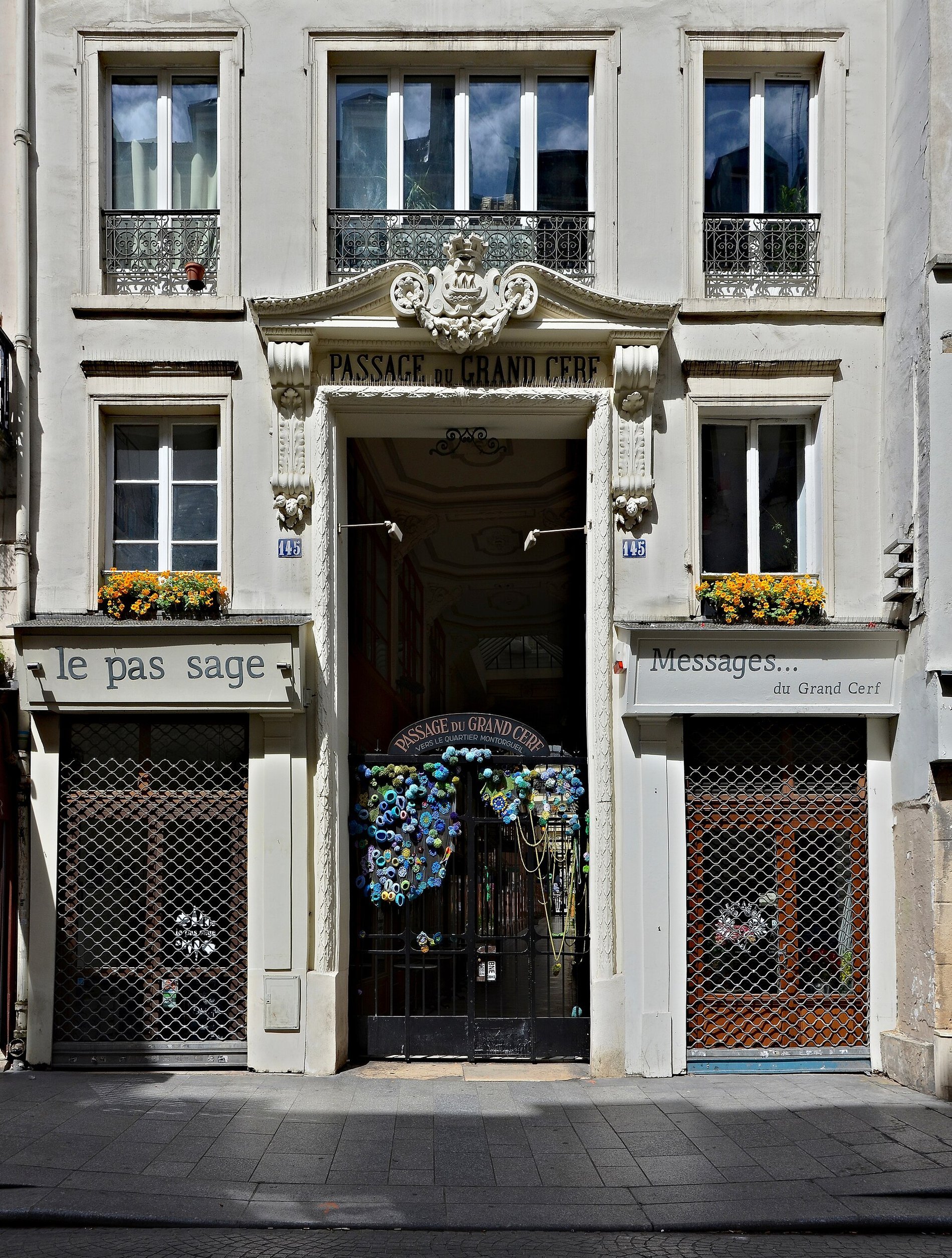
A step from Rue Montorgueil, the Passage du Grand-Cerf is famous for a glass ceiling that rises to almost twelve metres, the tallest of any passage in the capital. That height bathes the gallery in a rare glow and shows off its iron frame. The passage has become a favorite of creators: a jeweller here, a fashion label there, plus studios of decoration and craft along the way. Lovers of one-off pieces come to spend an afternoon, near Rue Saint-Denis yet far from the usual tourist trails.
Passage Choiseul and Passage du Caire, the Sentier side
The most secret passages
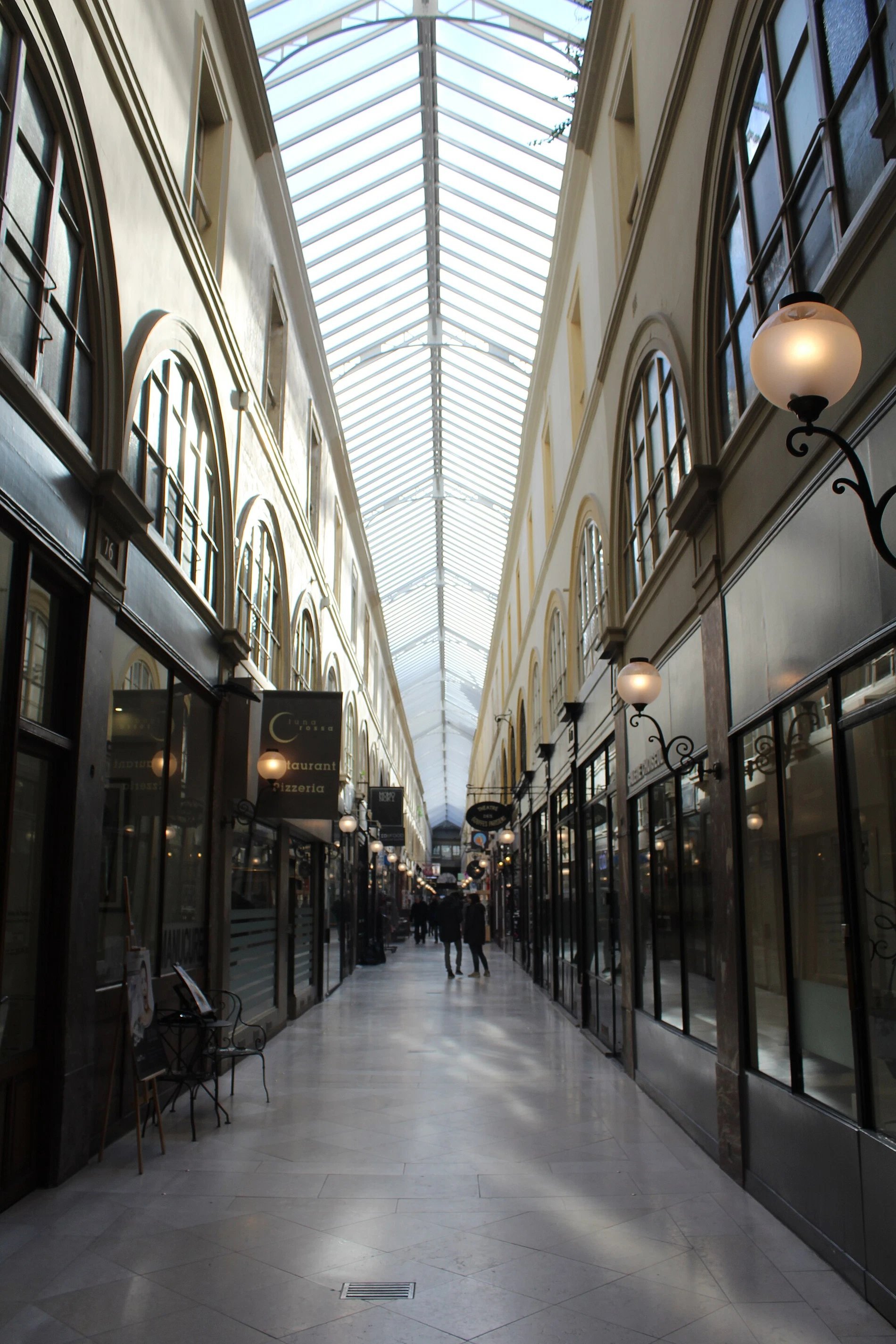
Opened in 1827, the Passage Choiseul is one of the longest on the Right Bank. The writer Louis-Ferdinand Céline spent his childhood here, above his mother's shop. Restored, this passage lines up fashion, a café or two and a good restaurant, and leads to the Bouffes-Parisiens theatre, near Rue Sainte-Anne and its famous dining scene. Further north, in the Sentier, the Passage du Caire draws the eye with a facade of Egyptian motifs. Opened in 1798, it is seen as the oldest and the longest passage in town, its galleries stretching several hundred metres towards Rue Saint-Denis and Rue Saint-Martin. Long devoted to printing and then textiles, it keeps an authentic feel, very different from the chic passages of the Bourse area.
Other passages worth exploring
A longer list for the curious
Beyond the must-see names, the capital hides more arcades for the curious. The Passage des Princes, the last one built in 1860, charms with a restored glass canopy, and this passage des Princes is a favourite of gamers today. The elegant Galerie de la Madeleine links its namesake square to Rue Boissy-d'Anglas, near Rue du Faubourg-Saint-Honoré. The Passage du Bourg-l'Abbé, the Passage du Ponceau and the Passage des Deux Pavillons complete the parcours close by, while the Passage du Havre, near Gare Saint-Lazare and the Galeries Lafayette, is a busy modern passage. Further out, the Passage du Prado and the lively Passage Brady, nicknamed the "Little India" along Rue du Faubourg-Saint-Denis, change the scene with Indian and Pakistani restaurants, spices and colour. On the Left Bank, near Saint-Germain, the Cour du Commerce Saint-André adds a historic touch, while the Passage Puteaux hides in the 8th. From the Havre to the Puteaux passage, each one has its own locations to discover.
Practical tips for your visit
Hours, itinerary and good ideas
A few tips to make the most of the day. Most passages couverts open early and close in the evening, but each store keeps its own hours, often shut on Sunday and sometimes Monday, so check before you set off: many boutiques run from Monday to Saturday. A weekday morning is the best time for calm, and spring, around April, is a nice season as the city wakes up. Allow half a day for a loop from the Galerie Véro-Dodat to the Galerie Colbert, by Rue des Petits-Champs, then from the Panoramas to Verdeau, all on foot. Ground-level access makes accessibility easy, with step-free accessibility almost everywhere, a real plus for accessibility, and a monument or château of your choice is never far. The closest metro station is usually Grands Boulevards, Bourse or Richelieu-Drouot, only a few stops from the main sights.
To go deeper, many guided walking tours retrace the history of these places, and a guided treasure hunt is fun for families. A simple map, or a quick search on Google, helps you plan a route, read a few tips and find the most popular spots and nearby attractions. We recommend you watch for the cafes hidden under the glazed roofs for a coffee, and we also recommend an early start. A good guided tour pairs well with the museum of Grévin.
Your base in the area
The Filigrane, on Rue Vivienne
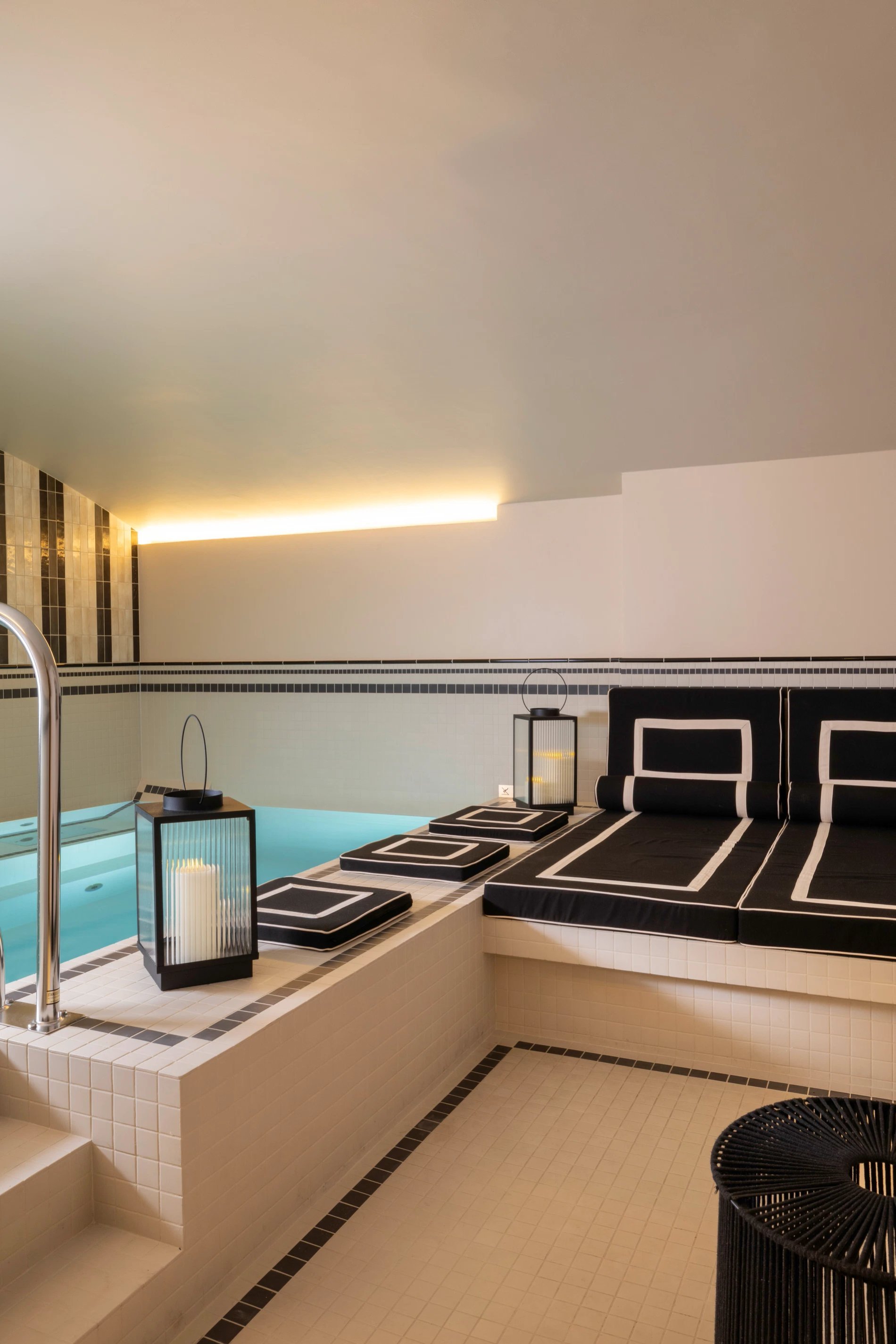
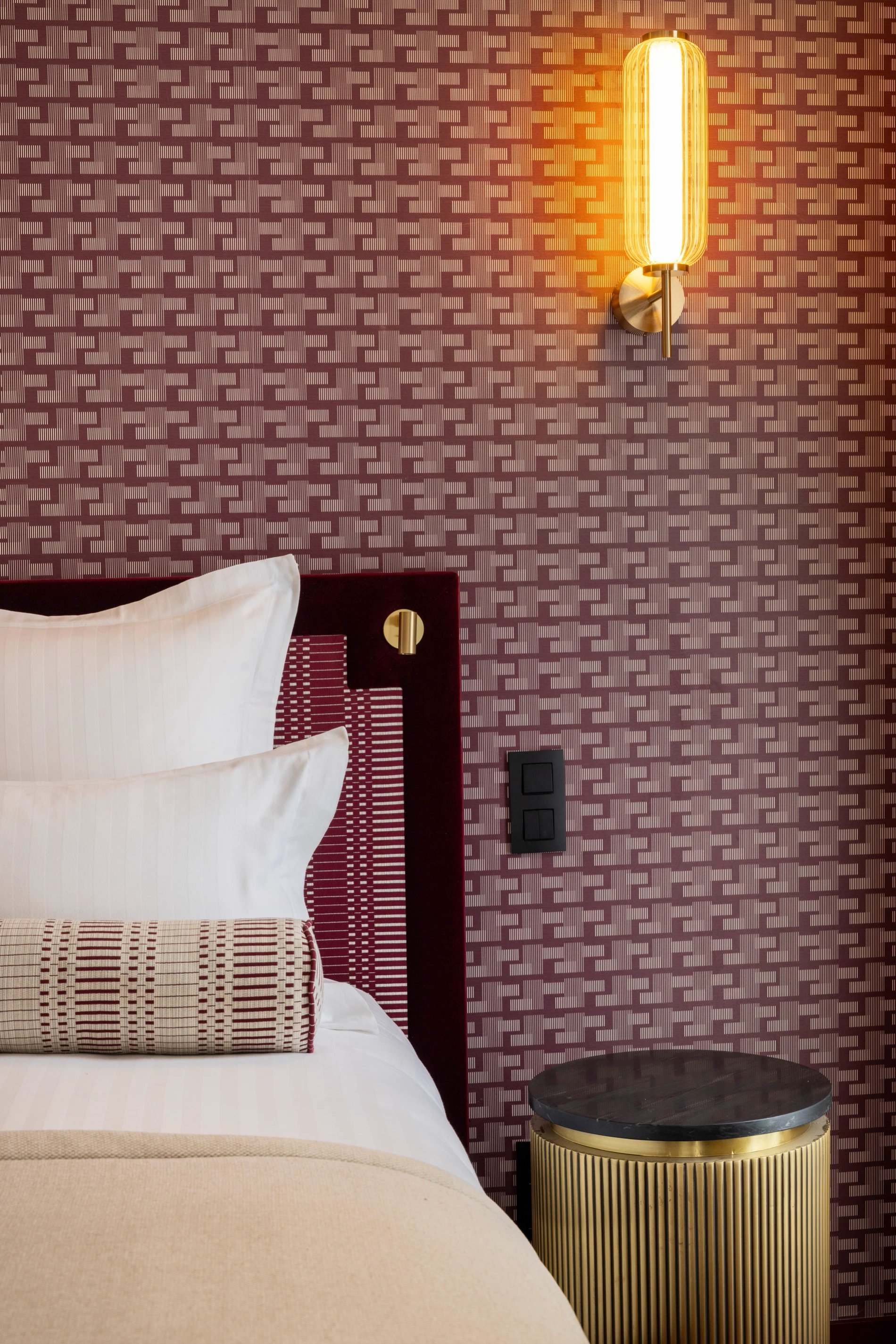
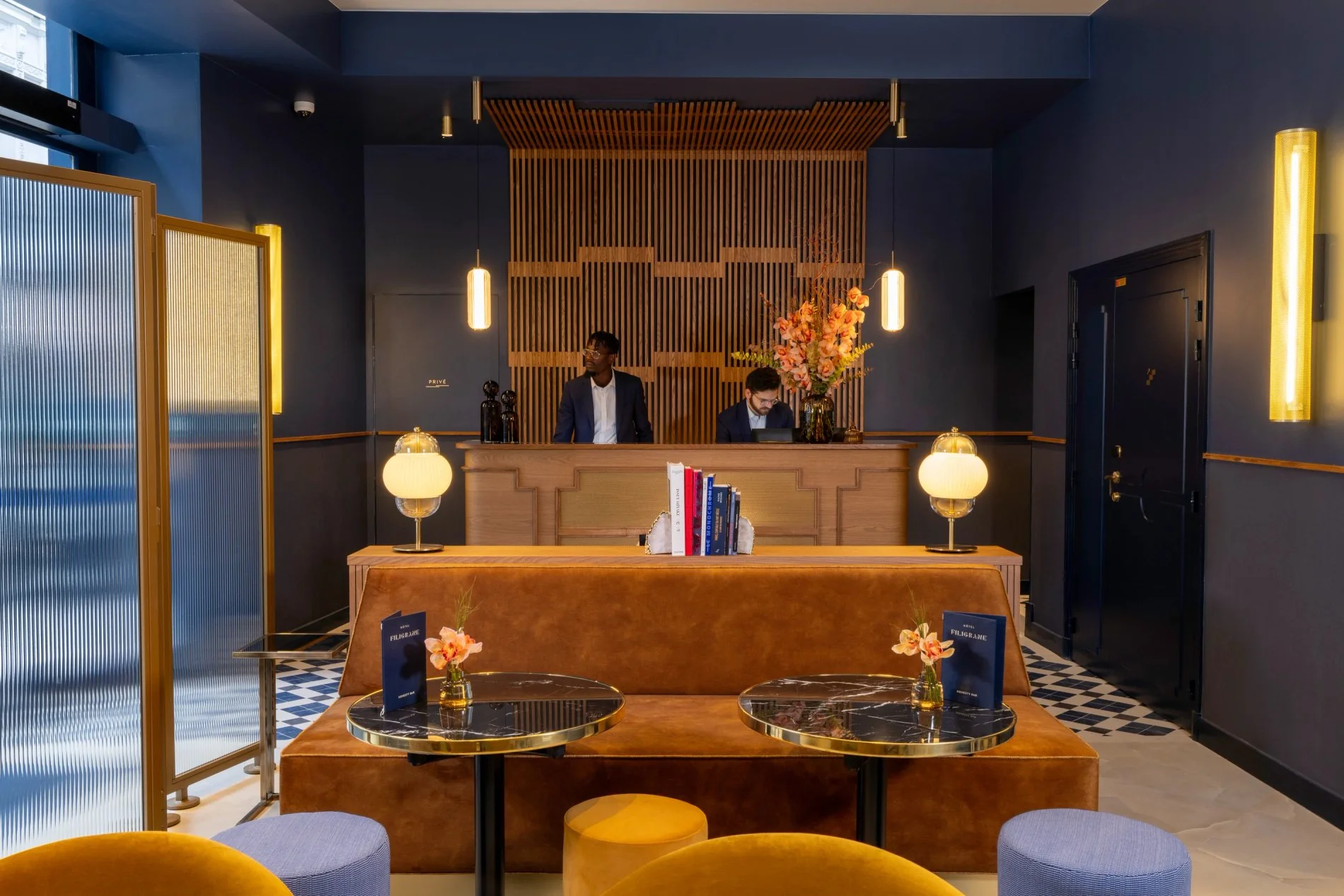
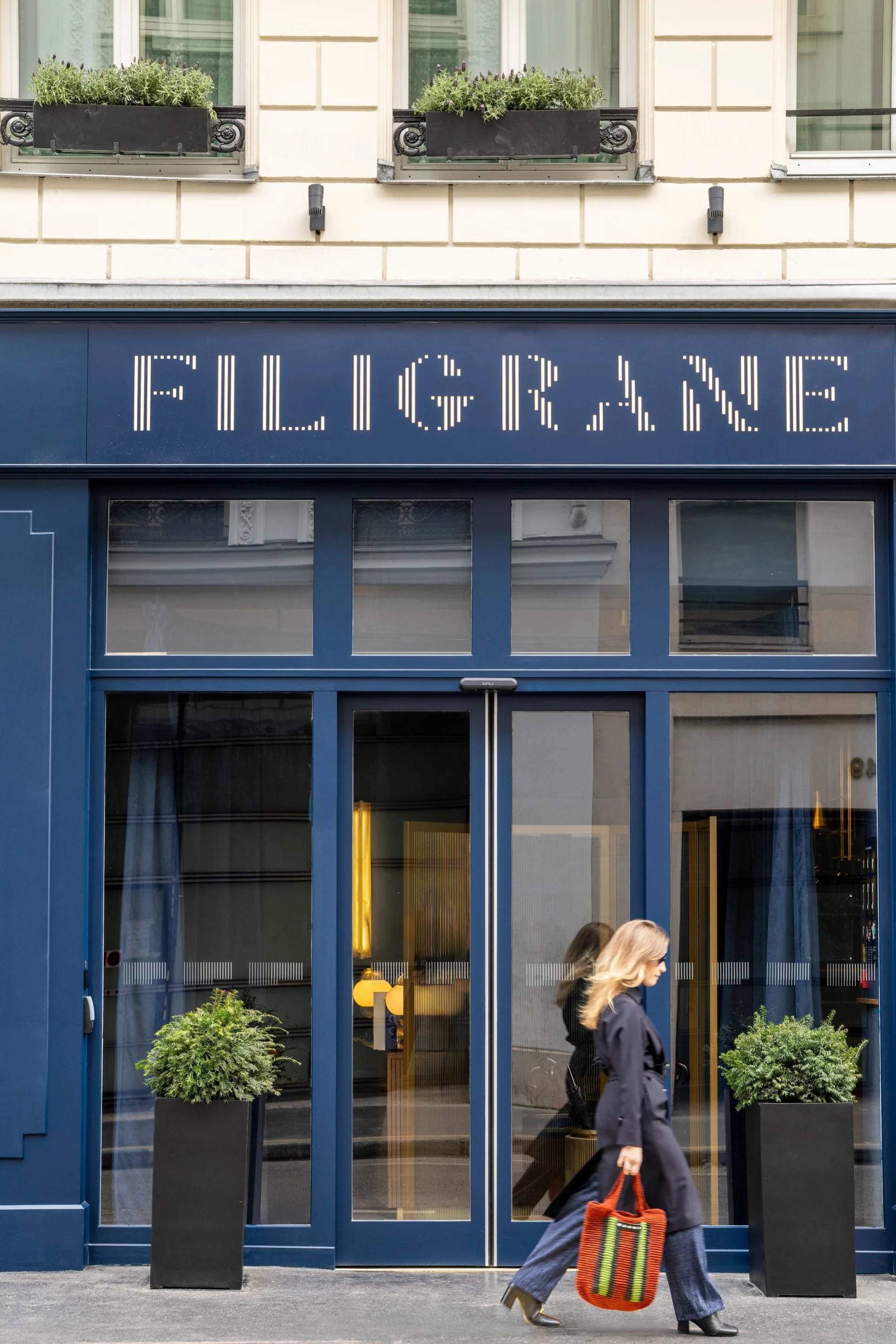
As for where to stay, sleeping in the 2nd arrondissement is a central location, a few minutes on foot from these covered galleries, in one of the most popular areas for travel in France. The Hôtel Filigrane, a charming hotel in Paris 2nd arrondissement on Rue Vivienne, is the ideal address to explore the passages right from your room: interiors inspired by the district, a private spa and an attentive reception. After the walk, enjoy a glass of wine at the honesty bar or a bottle of champagne, perhaps in one of the hotel's boutiques of experiences. For a couple's escape, see its romantic spa weekend offer, or reserve direct for the best price.
A Paris apart
A journey back in time
Exploring these passages couverts means a journey into the past, meeting a rare heritage that millions admire every year. Between glass, mosaics and shops full of charm, they reveal another face of Paris, more secret and more poetic. Put on comfortable shoes, follow your curiosity, and let this hidden city, a timeless destination, surprise you. The easiest way to enjoy it all is to make the Hôtel Filigrane your Parisian home: reserve your room direct on the official website for the best guaranteed price, and wake up just a few steps from these passages, ready to explore from the first morning coffee to the evening.
Frequently asked questions about the passages of Paris
Everything to know before you go
What are the best covered passages in Paris?
The finest passages include Galerie Vivienne, the Galerie Colbert, the Panoramas, the Jouffroy, the Passage Verdeau, the Galerie Véro-Dodat and the Passage du Grand-Cerf. These 19th-century galleries sit mostly in the 2nd and 9th districts and rank among the most beautiful of their kind in France.
What makes these passages unique?
They stand out for their glass roofs, their mosaic and marble floors and their Restoration architecture. Built as elegant covered arcades sheltered from the rain, they still hold antique shops, a print dealer, art galleries, a boutique and cafes, a timeless experience you will not find anywhere else in the capital.
Where can you find the passages in Paris?
Most sit on the Right Bank, in the 2nd and 9th districts, around the Grands Boulevards, Rue Vivienne and the Montorgueil area. The closest metro station is usually Grands Boulevards, Bourse or Richelieu-Drouot. A few, such as Véro-Dodat and the Galerie de la Madeleine, stand in the 1st and 8th.
Can you visit the passages for free?
Yes, visiting is completely free all year. You simply walk from one passage to the next, from Monday to Sunday, while each shop keeps its own hours. To learn the history, paid guided tours are offered by several associations and specialised guides.
Are there guided walking tours?
Yes, several guided tours run all year, in French and in English, on the architecture, the history and the nearby attractions. The Hôtel Filigrane reception can also recommend a route and the best spots to explore at your own pace.
Where should you stay to explore the passages?
Choose a hotel in the 2nd arrondissement, close to the galleries. The Hôtel Filigrane, on Rue Vivienne, is a charming and convenient address, a short walk from Galerie Vivienne, the Panoramas and the Grands Boulevards, and a comfortable base for your trip.